
Table of Contents
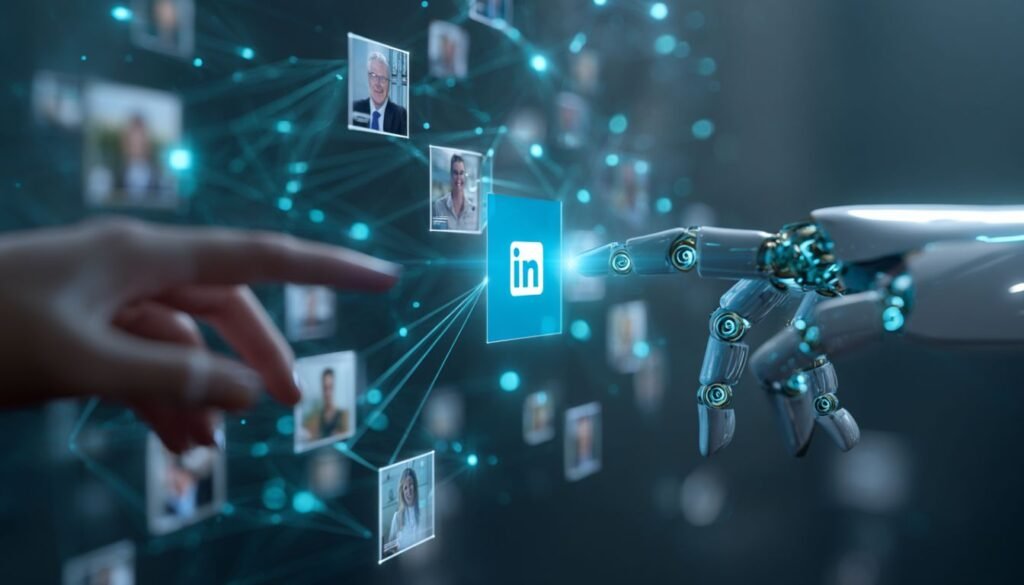
LinkedIn AI features are quietly but radically changing what it means to show up online as a professional. Open the app today and it feels less like a static job board and more like a social environment where AI co‑writes your posts, nudges you to attend events, and decides which ideas get a second life in the feed. The company insists this is still “professional networking,” but it is professional networking rewritten by algorithmic logic.
I notice it in my own feed. Posts find me weeks after they were published, resurrected by some relevance score I cannot see. AI suggestions hover under the composer box, offering intros and hooks. Event invitations sit beside job alerts. This is what happens when a resume site grows into a social platform and then wires itself to AI.
Below are 7 powerful ways LinkedIn AI features are reshaping professional networking, and why that matters not only for careers, but for how expertise, influence, and democratic norms function in digital spaces.
1. LinkedIn AI Features Turn Everyone Into A Reluctant Writer
One of the most immediate shifts comes from the basic writing tools. LinkedIn AI features now help users:
- Draft posts from scratch
- Rewrite headlines and hooks for engagement
- Summarize long updates into scannable notes
- Personalize outreach messages for recruiters, leads, or collaborators
For the average user who lives in Excel or Figma and not in Google Docs, this is liberating. You do not have to be a natural writer to participate in the public conversation anymore. You can offload the first draft to AI, then edit for tone and truth.
There is a democratic upside here. People who are not native English speakers or who grew up far from elite media circles suddenly have tools that let them communicate on more equal linguistic footing. LinkedIn AI features lower the barrier to entry, and that matters in a global economy that still overvalues polished English.
But there is also a risk that feeds start to sound the same. If too many professionals accept the AI suggestion as is, you get a bland consensus tone that hides real differences in experience and power. The challenge is not to use AI or to avoid it. The challenge is to use it as scaffolding, not as your voice.
2. Algorithmic Boosts Make LinkedIn A True Social Platform
The second major shift driven by LinkedIn AI features sits under the hood in the recommendation engine itself. LinkedIn has quietly redesigned its feed so that:
- Posts are classified as spam, low quality, or high quality, often with AI detection
- High‑quality posts can resurface for weeks if they keep generating meaningful engagement
- Topic authority and niche consistency are rewarded, turning specialists into micro‑influencers
As the Hootsuite Social Trends research summarizes, social networks in 2024 and beyond are optimizing hard for content that feels authentic, relevant, and entertaining, even for B2B audiences Hootsuite Social Trends. LinkedIn is no exception. Only the setting is different. The stakes are your career, not your vacation photos.
This is LinkedIn’s social turn. Your post is no longer a single broadcast to your first‑degree connections. It is a piece of content that an AI system will keep testing, resurfacing, and threading into strangers’ feeds if it believes you have something useful to say. That can be fantastic for underrepresented experts who finally get reach. It can also amplify hot takes about hiring, politics, or culture that were never meant to travel as far as they do.
3. LinkedIn AI Features Are Rewriting The Job Search
When people talk about LinkedIn, they still usually mean jobs. Here, too, LinkedIn AI features are shifting the ground.
On the recruiter side, AI tools:
- Suggest candidates based on skills and inferred potential
- Help craft outreach messages tailored to specific profiles
- Analyze profile signals and engagement patterns to predict who might be open to a move
On the candidate side, AI surfaces:
- Recommended roles that match not just job titles, but skill clusters
- Personalized suggestions for skills to add or courses to take
- Drafts of messages to hiring managers based on your background
This sounds like efficiency. In many ways, it is. A recruiter no longer has to manually sift through ten thousand profiles. A junior professional does not have to guess which of their skills matter.
Yet AI‑assisted job matching can also bake in old biases at scale. If the training data overvalues a handful of elite schools or certain career patterns, the system might keep recommending people who already look like those who sit in power. That is not just a technical question. It is a question about fairness in opportunity and access, which is, at its core, a democratic concern.
Professionals will need not only to optimize their profiles for LinkedIn AI features, but to demand transparency about how those features rank and filter them.
4. Social Events And AI Make LinkedIn A Professional Public Square
One of the underappreciated areas where LinkedIn AI features matter is events and community. The platform has invested heavily in:
- Native events, integrated with tools like Zoom, that AI helps recommend based on your industry and interests
- Newsletter ecosystems that AI can help draft, summarize, and distribute
- Topic‑based suggestions that nudge you to join conversations you did not know you needed
The result is that LinkedIn starts to feel like a constantly running professional conference. You might attend a live session on AI and marketing before breakfast, skim a thought leader’s newsletter at lunch, and join a comment thread about labor law in the afternoon.
AI is quietly orchestrating much of this. It guesses which people and topics matter to you, nudges you toward them, and then uses your behavior to adjust the next recommendations.
There is real upside in terms of access. A designer in Bogotá can learn from a product leader in Berlin without a conference ticket. A policy analyst in Nairobi can share a thread that reaches investors in London. But there is also the question of who gets surfaced into these conversations, and whose expertise remains invisible.
If LinkedIn is becoming a key public square for professionals, LinkedIn AI features are becoming the silent moderators. That should push us to ask what rules they follow.
5. LinkedIn AI Features And The New Politics Of Personal Branding
Personal branding used to be something executives hired consultants for. LinkedIn AI features have dragged it into everyday professional life.
Today, you can:
- Ask AI to suggest content ideas based on your role and sector
- Use AI to repurpose one long post into carousels, short updates, and comment replies
- Get automated feedback on what topics and formats drive the most engagement in your niche
Suddenly, being “good at LinkedIn” is not about occasional humblebrags. It is about running a small media operation for your own career, with AI as a producer and editor.
For workers with less institutional power, that can be a form of self‑defense. If your company is not going to highlight your work, you can do it yourself. You can show what you know, build a network, and make yourself harder to quietly sideline.
The flip side is that people who are already privileged, already charismatic, and already resourced may benefit even more. They are the ones who can most easily turn AI‑assisted content into speaking gigs, board roles, or media appearances.
If you are working in social media or content, this is where strategy becomes survival. Using AI to systematize your own publishing workflow without losing authenticity is crucial. I walk through practical ways to do this, from content pillars to ethical automation, in more depth at AI for Social Media Content Marketers.
6. Global, Cross‑Language Networking At AI Scale
Another important dimension of LinkedIn AI features is language. Translation and summarization tools now make it much easier to:
- Read posts written in languages you do not speak
- Draft connection requests or comments for contacts in other countries
- Follow global conversations without waiting for English‑language coverage
On its best days, this feels like a long‑overdue correction. English stops being such a rigid gatekeeper. A brilliant engineer writing in Portuguese or a policy expert posting in Hindi can still enter your feed.
However, translation is never neutral. Nuance, humor, and cultural context can get flattened or misread. And whenever AI attempts to infer “tone” across languages, it can misclassify dissent or critique as negativity.
For democracies, where cross‑border collaboration on issues like climate, migration, and digital rights matters, LinkedIn AI features that support global professional networking are a real asset. But they need to be built with an awareness of linguistic and cultural power, not just engagement metrics.
7. Governance, Transparency, And The Future Of LinkedIn AI Features
Finally, there is the question almost no splashy product announcement wants to confront. Who governs all this. LinkedIn AI features are now deeply embedded in:
- Who gets seen and heard
- How jobs are matched and offers are made
- Which ideas spread and which are buried
That makes LinkedIn, in practice, an institution, not just a product. And institutions that powerful need norms, transparency, and accountability.
Some of the right moves are starting to appear. LinkedIn has experimented with labels for AI‑generated content and clarified some data‑usage policies, in line with broader industry trends described in the Hootsuite Social Trends report Hootsuite Social Trends. Yet we still know very little about:
- How AI ranks posts that touch on politics, labor organizing, or public policy
- What kinds of content are downranked in the name of “professional” norms
- How appeals work when AI‑assisted moderation gets you wrong
If LinkedIn is where journalists look for sources, where policymakers test messages, and where workers build solidarity, then the governance of LinkedIn AI features is not a niche tech issue. It is a question about how much of our public and professional life we are willing to outsource to systems we cannot see.
The next phase of professional networking will be built on top of AI whether we like it or not. The open question is whether we treat that as a black box to work around, or as a new civic infrastructure we have the right to scrutinize, debate, and reshape.