

Artificial intelligence has moved from a novelty to a core workflow tool. In 2026, 85% of content marketers now use at least one AI tool regularly, and teams using AI-assisted workflows report 4x productivity gains on average. The global AI content creation market is projected to reach $60B by year-end.
But with hundreds of tools competing for your attention, which ones actually belong in a professional workflow? This guide breaks down the 10 tools defining how smart content creators work in 2026.
1. Claude (Anthropic)
Best for: Long-form content, research synthesis, strategic thinking
Claude excels at producing nuanced, well-structured content and analyzing complex topics. Its extended context window makes it ideal for multi-part articles, brand guides, and content strategy development.
2. ChatGPT / GPT-4o (OpenAI)
Best for: Versatile writing, code generation, multimedia tasks
The industry standard for multi-modal AI. GPT-4o handles text, images, voice, and file analysis in a single session — making it a go-to for content teams that need flexibility.
3. Midjourney v7
Best for: Editorial illustrations, social visuals, brand imagery
Still the gold standard for artistic AI image generation. Version 7’s improved photorealism and prompt consistency make it invaluable for creating scroll-stopping visuals for blog posts and social media.
4. Canva AI (Magic Studio)
Best for: Templates, social graphics, presentations
Canva’s AI layer — including Magic Write, Magic Design, and Dream Lab — makes professional design accessible without a designer. The free tier covers most solo creator needs.
5. Descript
Best for: Podcast editing, video repurposing, transcript-based editing
Edit audio and video like a document. Descript’s AI removes filler words, generates captions, and creates audiograms automatically — cutting post-production time by up to 70%.
6. Surfer SEO
Best for: SEO optimization, content scoring, SERP analysis
Surfer analyzes top-ranking pages and tells you exactly what your content needs to compete — keyword density, heading structure, content length. Pair it with any AI writer for SEO-optimized output.
7. Perplexity AI
Best for: Real-time research, fact verification, cited sources
Perplexity is the researcher’s AI — it searches the live web and returns answers with citations. Essential for content creators who need current data and don’t want to hallucinate statistics.
8. Notion AI
Best for: Content planning, editorial calendars, knowledge management
Notion AI integrates directly into your workspace to summarize notes, generate content briefs, and draft outlines. It eliminates context-switching between your planning tool and your writing tool.
9. ElevenLabs
Best for: Text-to-speech, podcast narration, audio content
The most realistic AI voice synthesis available. Use it to turn blog posts into audio versions, create podcast intros, or produce multilingual content without recording sessions.
10. Make (formerly Integromat)
Best for: Workflow automation, connecting AI tools, publishing pipelines
The glue that holds your AI stack together. Make connects your tools — from AI writing to social scheduling to CMS publishing — so content moves through your workflow automatically.
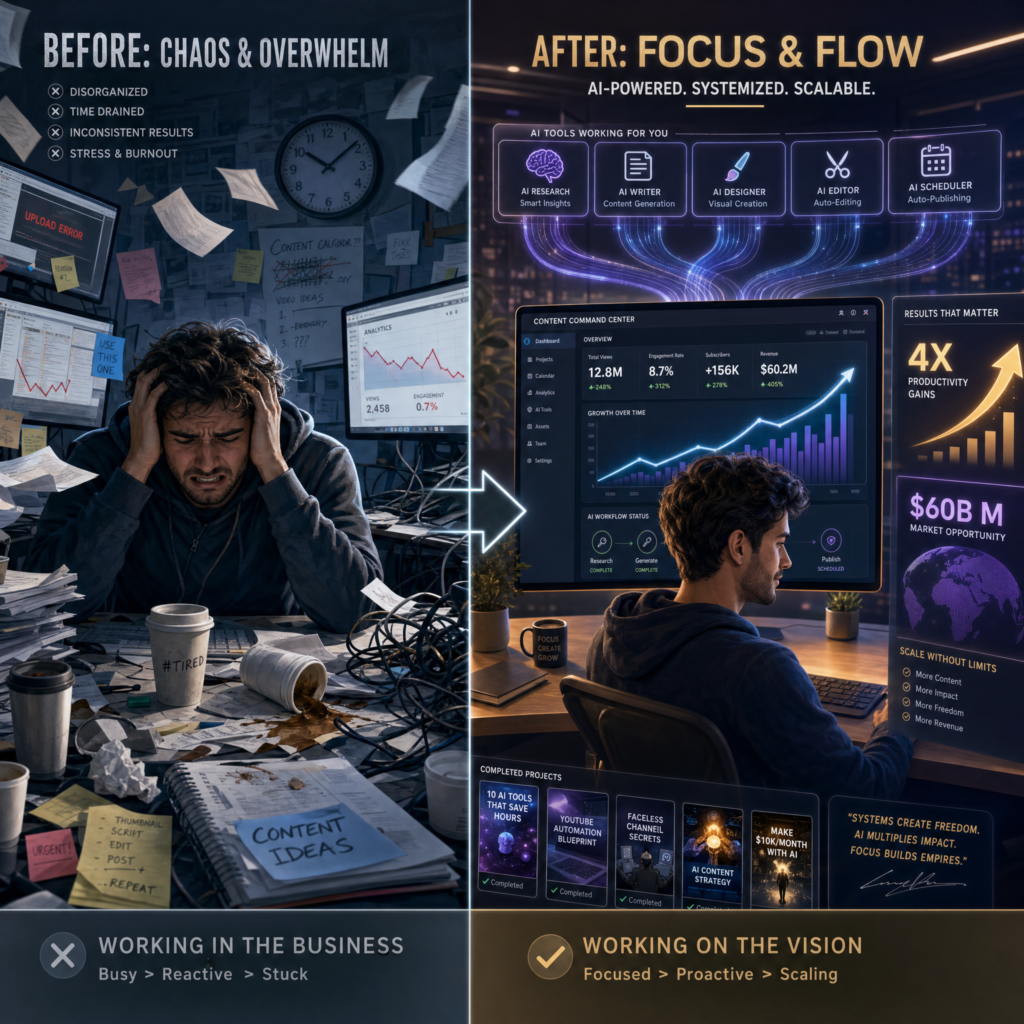
Building Your Workflow
The best AI toolkit isn’t the most tools — it’s the right tools connected intelligently. A lean stack of 3-4 well-integrated tools consistently outperforms a bloated collection of disconnected apps.
Start with one tool per workflow stage: research (Perplexity), writing (Claude or ChatGPT), design (Canva or Midjourney), and distribution (Make). Build from there as your needs grow.